

GOMI / DESIGN
Design begins before drawing.
We start with meaning, build the story and shape the relationships that allow people to experience it.
A POSITION, MADE VISIBLE
Meaning before form.
Exhibition design is often treated as a sequence of spatial tasks: receive the outline, find references, establish a style, develop forms and produce renderings. The longer I work in this field, the more convinced I become that a project is determined earlier—by whether we have understood why it exists, what it needs to say, who it is speaking to and what people should take away. The starting point is not what to draw. It is why.
Planning and design are often divided too early. One team writes the content and another draws the space; both may complete their tasks, yet the result still feels disconnected. A designer does not need to replace the planner, but must read an exhibition outline as a script rather than an inventory. Planning tells the story through ideas. Design allows that story to happen through space.
GOMI DESIGN THINKING / DEVELOPED THROUGH PROJECT PRACTICE

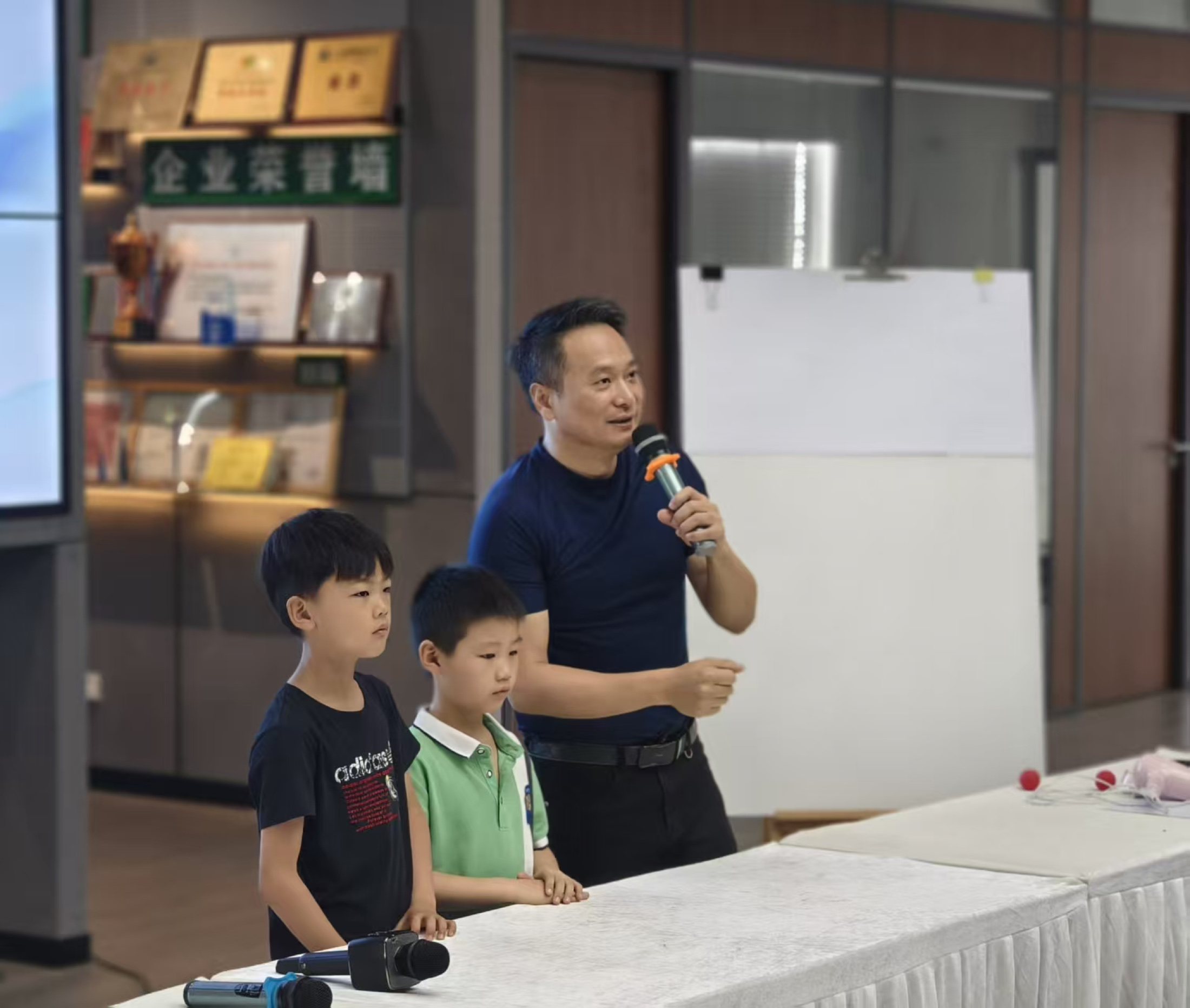
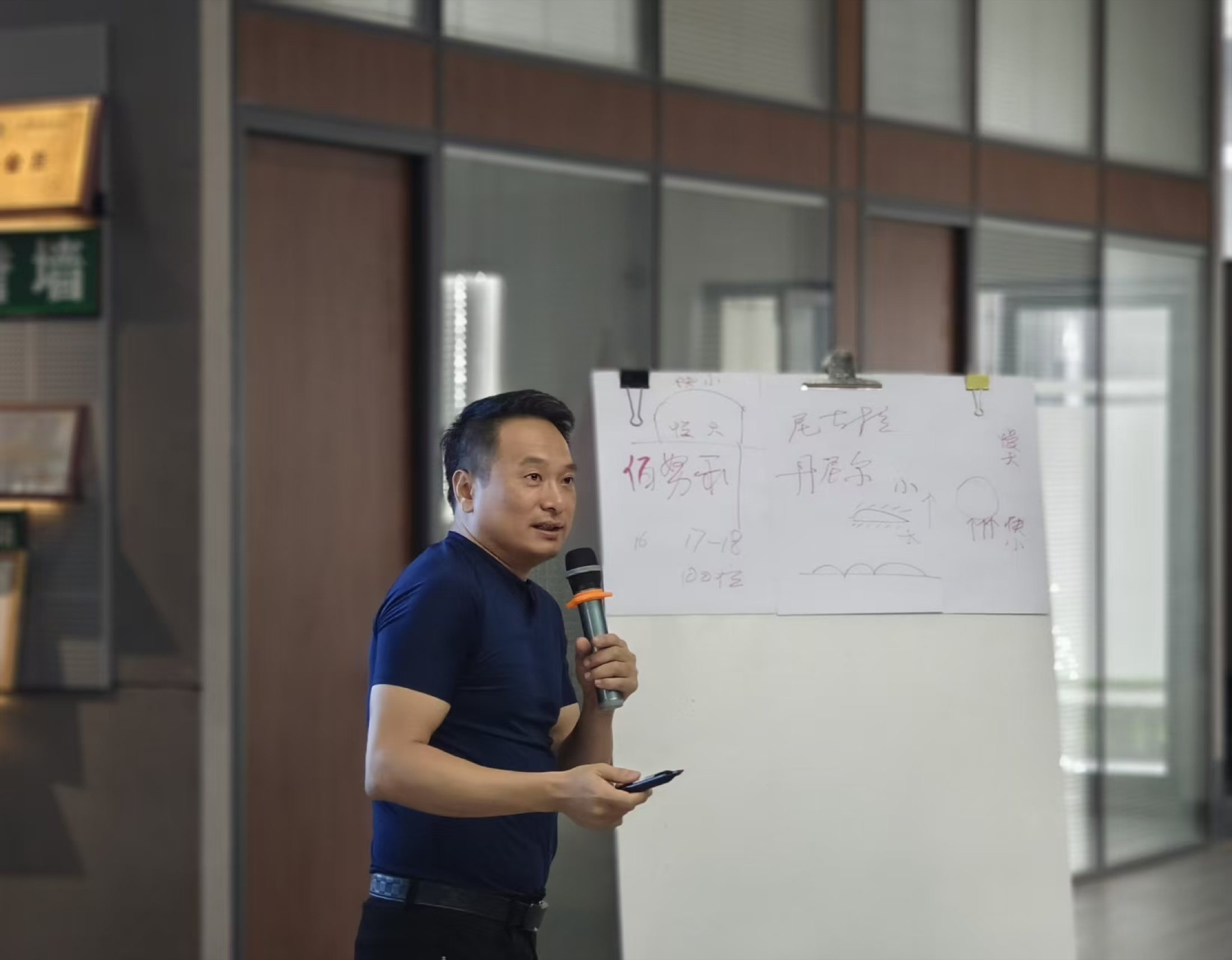 RAINNY ZHAN / GOMI CO-FOUNDER

TWO JOURNEYS / ONE EXPERIENCE
Story sets the direction. Emotion gives it rhythm.
The story journey organises what visitors encounter and understand. The emotional journey recognises that people become curious, excited, tired, surprised, attentive and reflective at different moments. Scale, light, colour, material, sound, participation and pace all influence that experience. We choreograph not only how visitors move, but how understanding and feeling unfold together.
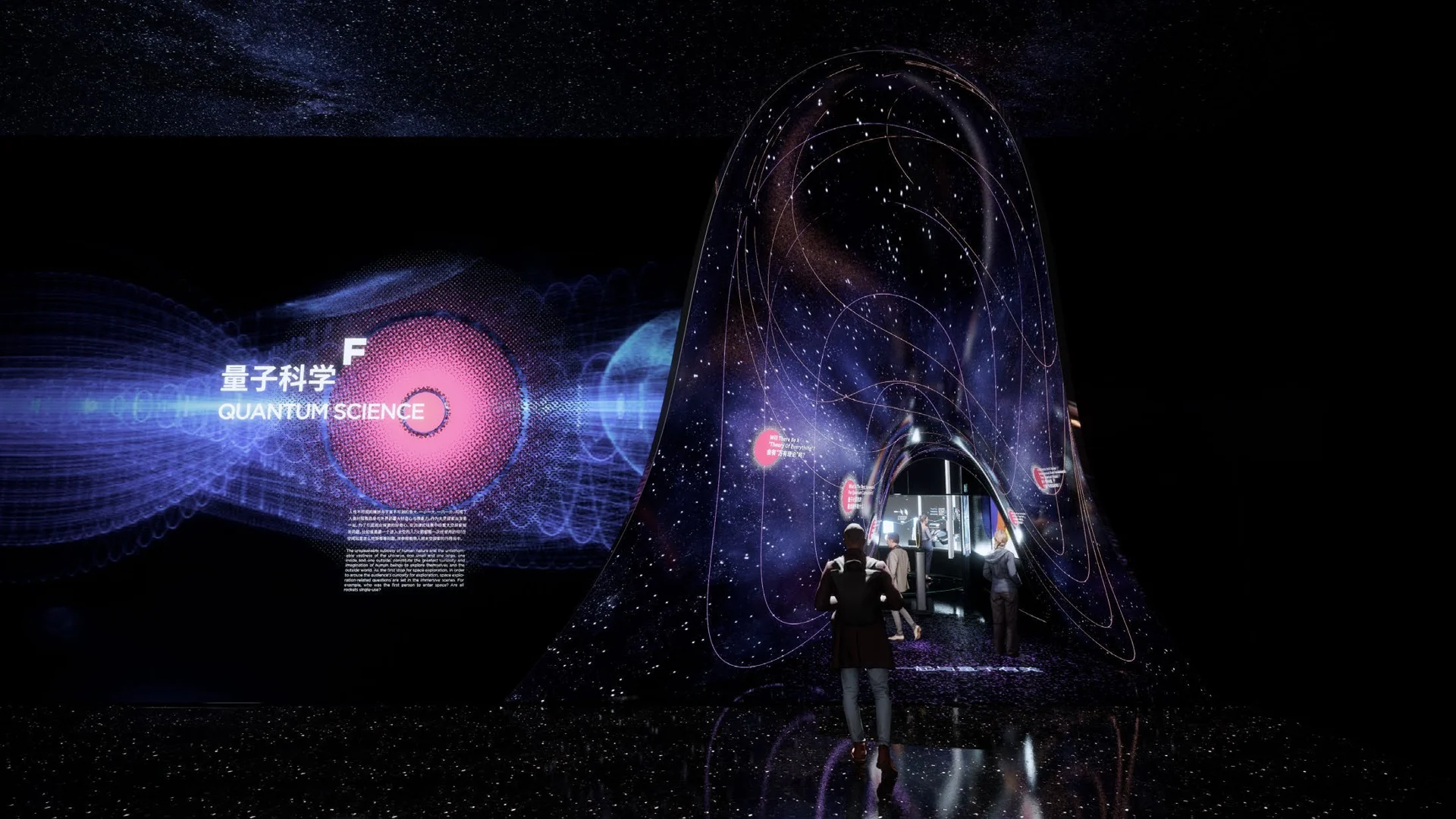
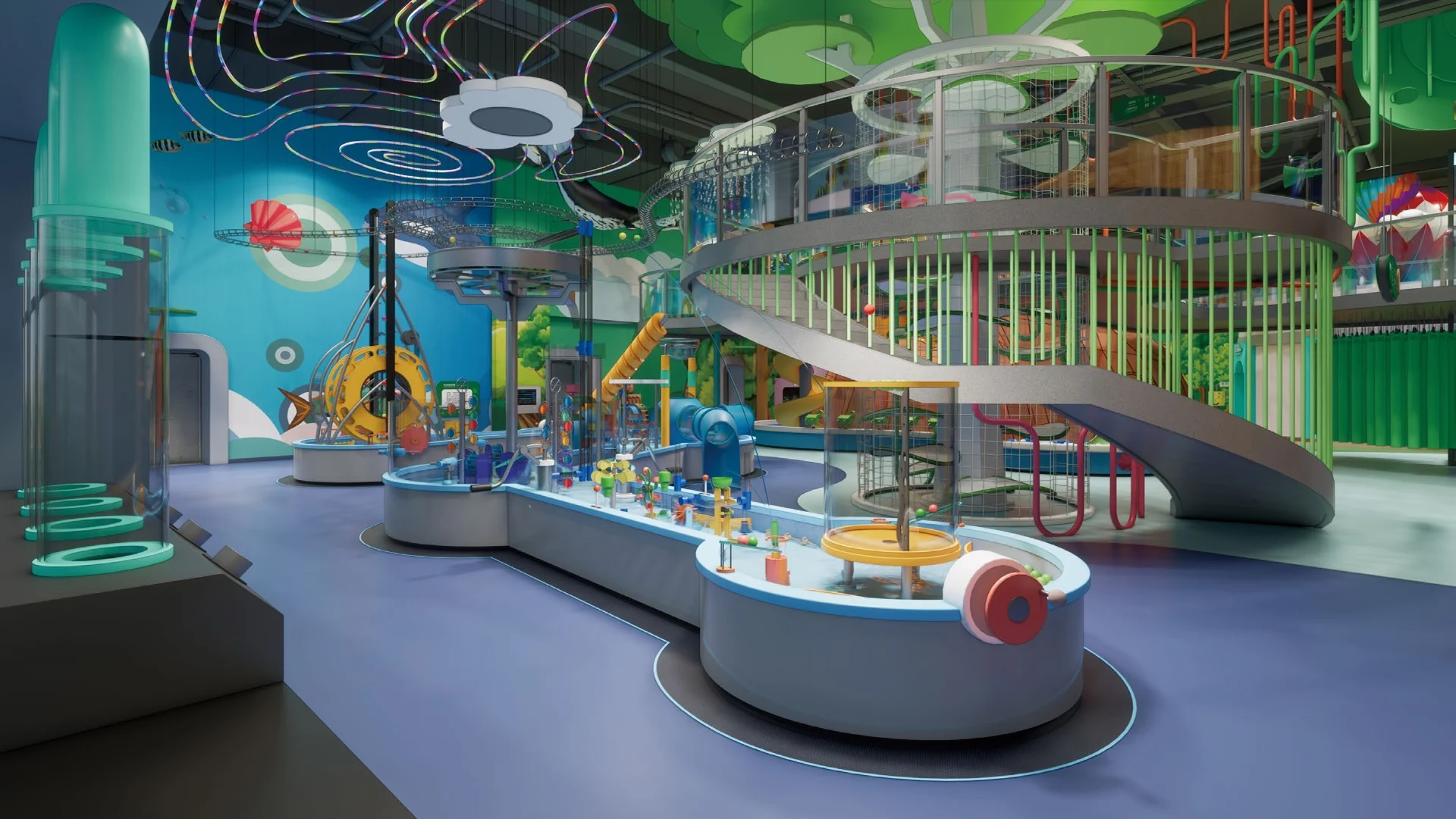
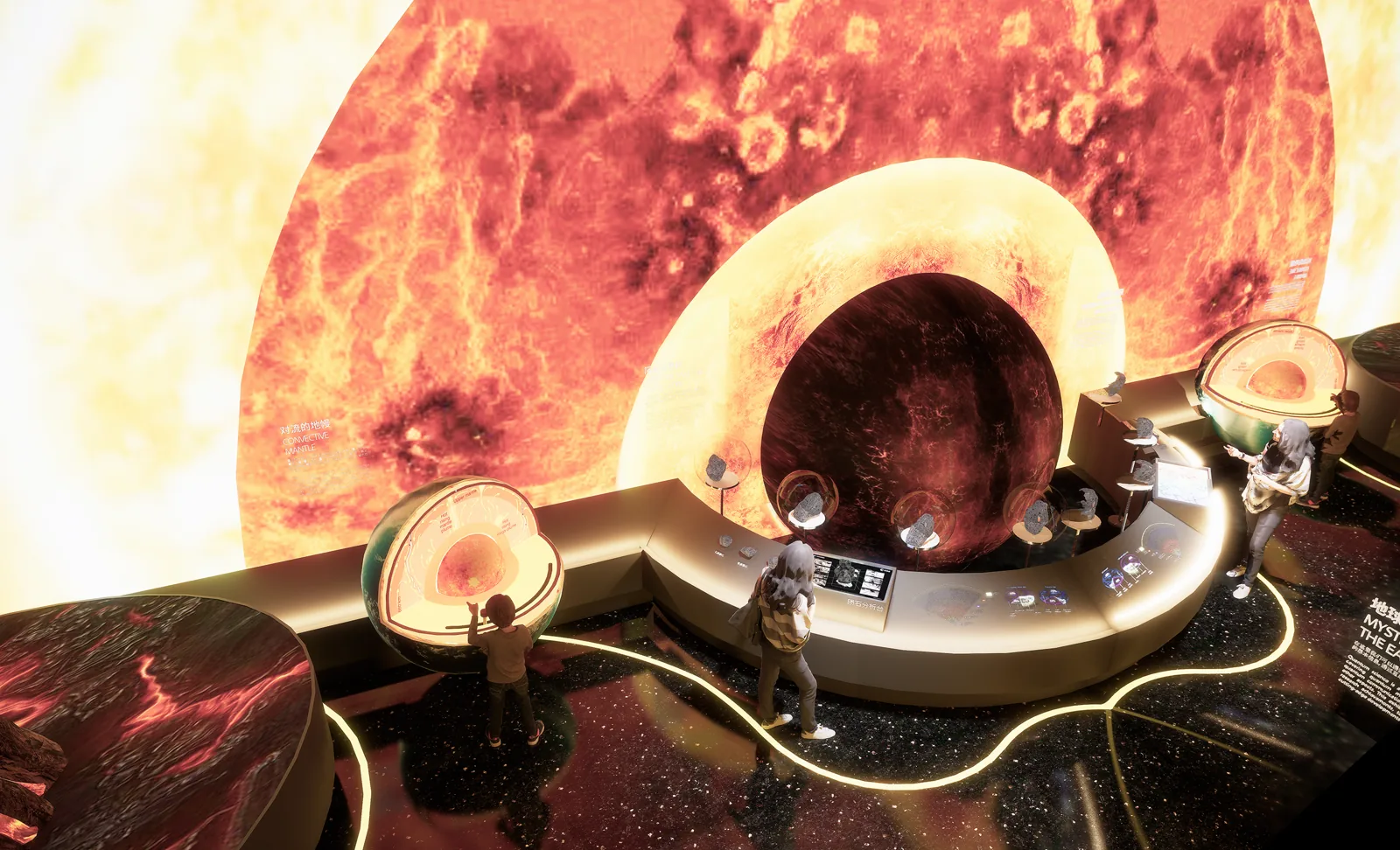
SPACE IS PART OF THE STORY
The room carries meaning.
A strong concept can still fail if visitors cannot find it in the room. Space should not be treated as a container into which a story is placed. The rise and fall of the content should shape spatial rhythm; the hierarchy of information should shape emphasis; the process of understanding should shape movement. We should understand the story first, then allow space to grow from it.
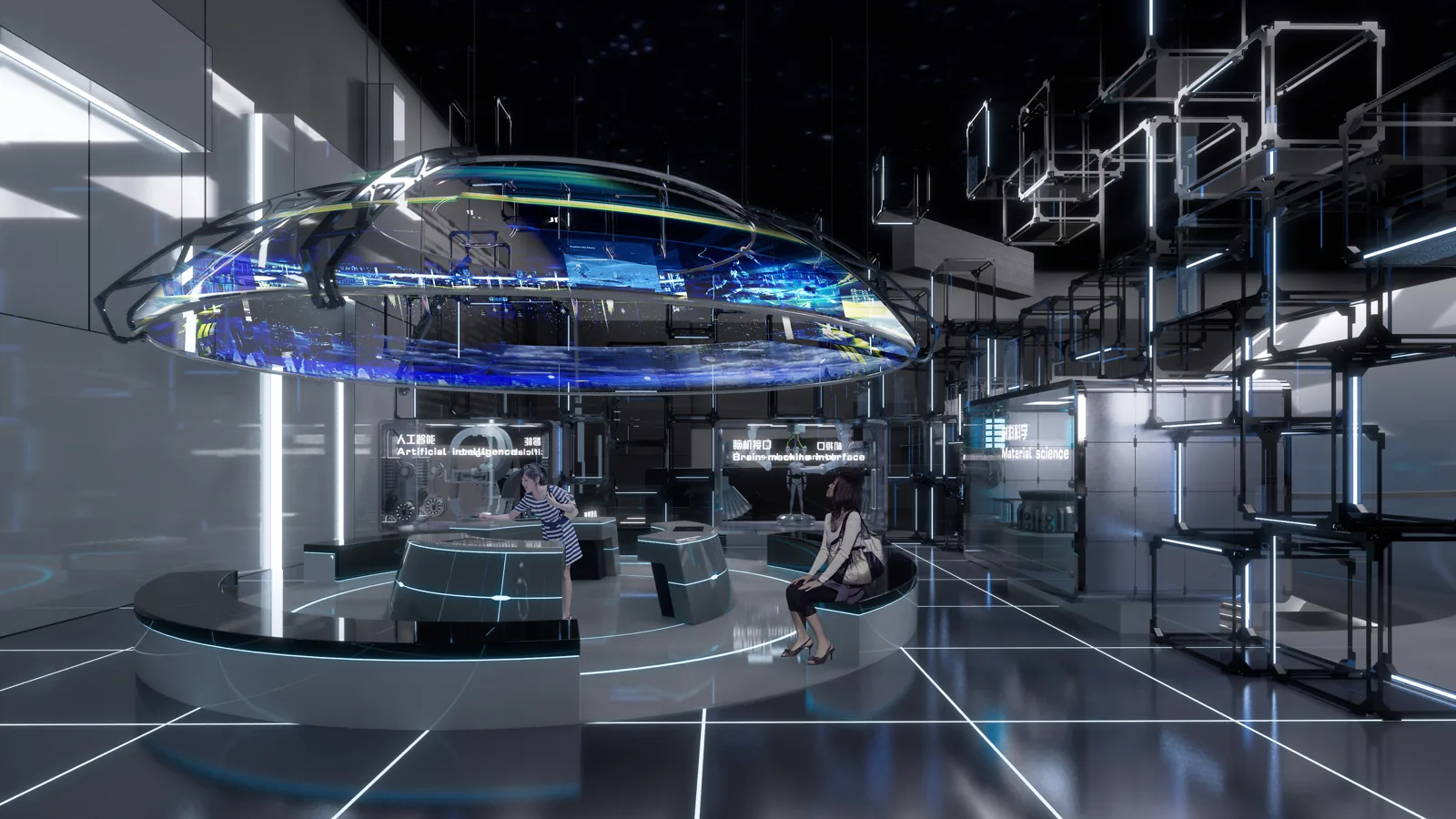
See Universe Exploration ↗DESIGNING RELATIONSHIPS
Not a collection of objects.
Exhibition design is not the repeated act of putting things into a room. It is the work of organising relationships: between one exhibit and the next, between content and space, between space and architecture, and between a person’s body, view, movement and behaviour. Form, wall, light, motion, stillness, presence and absence should depend on and strengthen one another. When these relationships are right, even a restrained space can carry force.
Less, but better.
Space is limited, and so is attention. Adding more form, material, light, graphics, interaction and technology can make the important idea harder to see. Restraint is not a pursuit of minimalism for its own sake. It is the ability to decide what should lead, what should become quiet, what deserves space and what can be removed. Mature design does not prove how much the designer has done; it makes the subject visible.
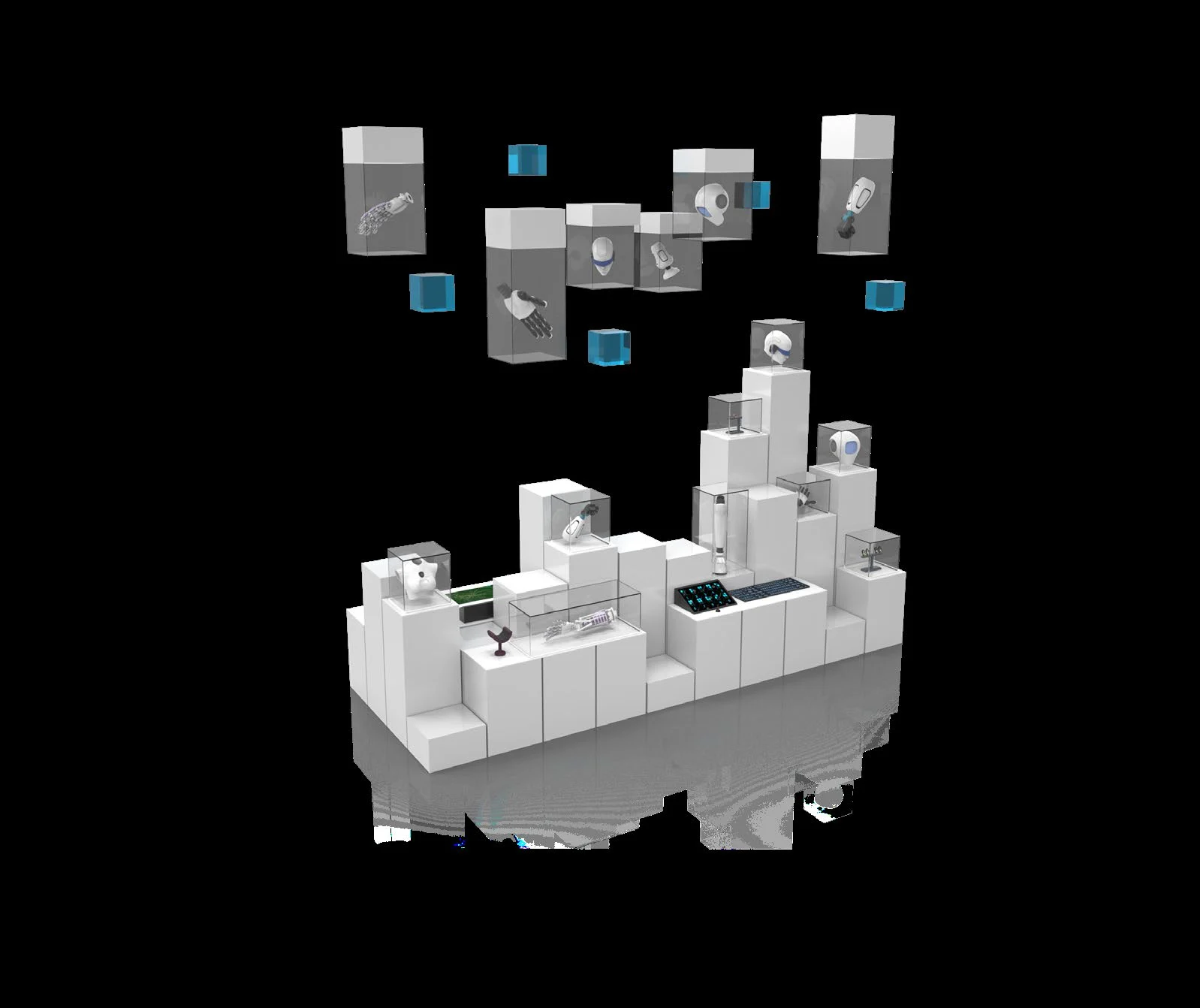
TECHNOLOGY WITH A JOB TO DO
Purpose before novelty.
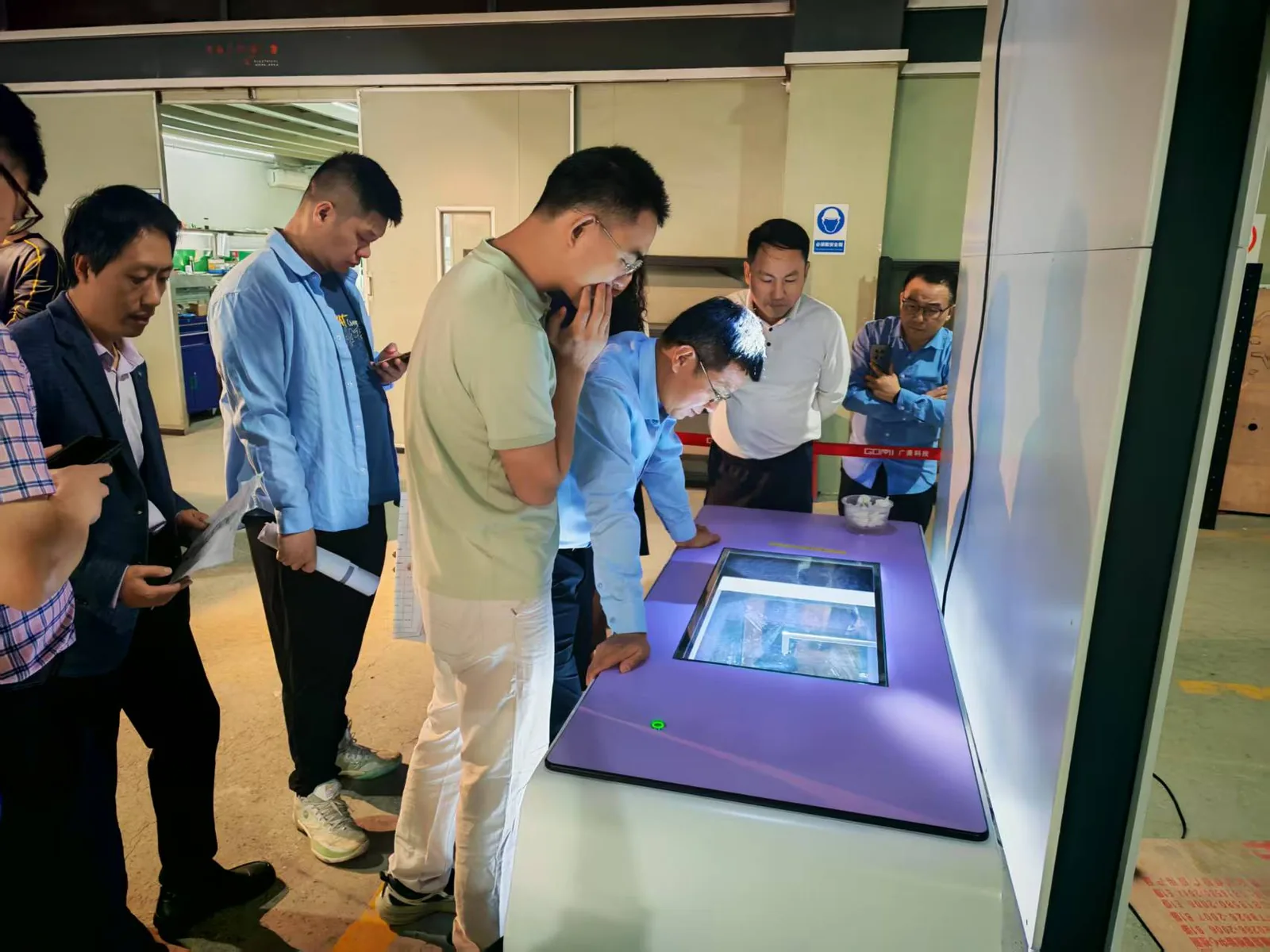
Touch, sensing, AR, VR and projection can all be useful, but novelty is not a reason to use them. Each system should be tested against clear questions: does it help people understand, improve participation, strengthen the story, operate reliably, remain maintainable and allow future updates? The most mature technology does not ask visitors to admire the device. It disappears into an experience that works.
FIT
Does it serve the theme?
UNDERSTANDING
Does it make the idea clearer?
PARTICIPATION
Does it give the visitor a meaningful role?
RELIABILITY
Can it work every day and be maintained?
CHANGE
Can its content and system evolve?
FROM WHY TO WHAT TO HOW
One idea. Eight connected decisions.
A proposal is often tested by one direct question: the concept is persuasive, but how will it exist in the space? I think design must answer on three levels. Why explains the decision; what describes the form and experience it creates; how specifies the material, structure, process and technology that make it possible. An idea that cannot be translated and delivered is not yet a complete design.
WHY
Why should this exhibition exist?
THEME
What central idea makes the project specific?
NARRATIVE
How should knowledge and emotion unfold?
SPACE
How does the story become rhythm and movement?
INTERACTION
What should visitors do, and why?
REALISATION
Which materials, structures, processes and technologies make it real?
VALUE
Where should limited resources create the greatest effect?
AFTERLIFE
How will staff operate, maintain and update it?
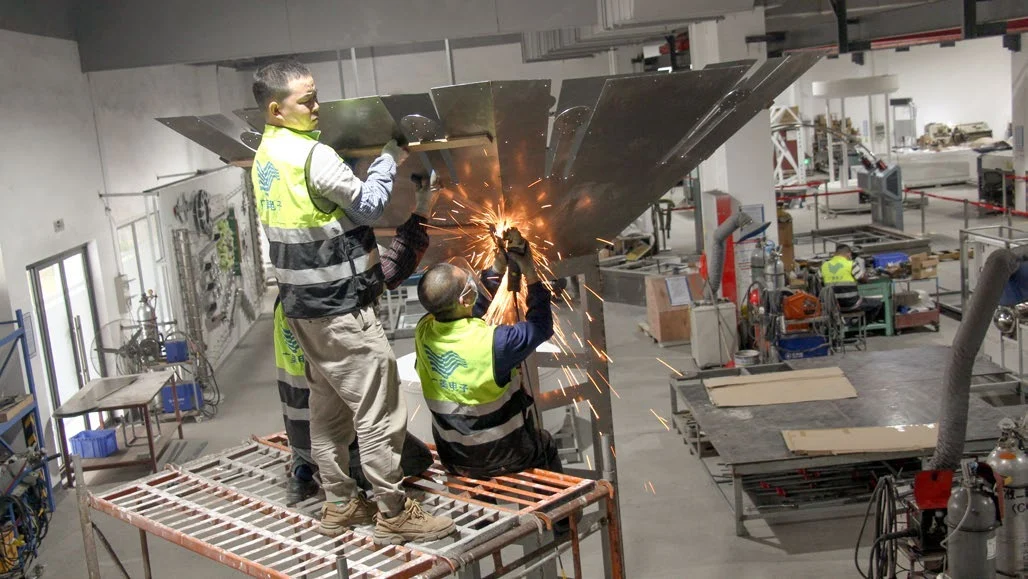 GOMI WORKSHOP / GUANGZHOU
DESIGN MUST SURVIVE REALITY
Thought becomes detail, system and matter.
A convincing rendering is not a completed project. If key junctions, materials, structures and technical requirements remain vague, uncertainty simply moves into design development, production and construction—where it creates rework, cost and risk. A mature project builds a clear chain from thought to concept, from concept to space, and from space to details, parameters, fabrication and installation.
BEYOND OPENING DAY
Opening is the first day of use.
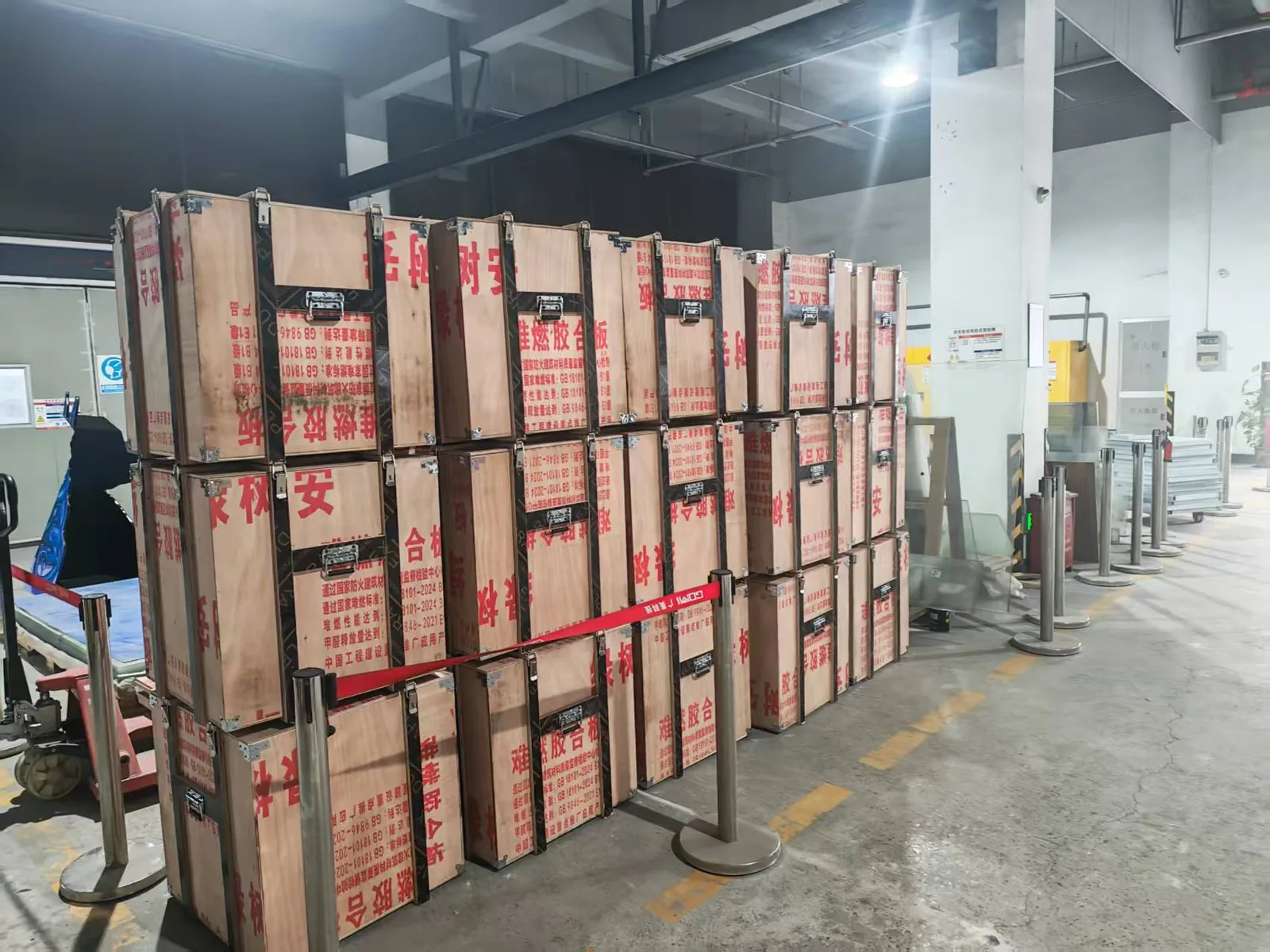
An exhibition’s longest life begins after construction. Staff need to operate it; exhibits need maintenance; content will change; events may require different layouts; visitor flows vary; technical systems need access and eventual renewal. These questions must enter planning and design early. We design beyond opening day—for every day that follows.
Good design does not prove itself by spending more. It makes every investment carry more of the idea.

GOMI DESIGN POSITION
FROM DRAWING TO THINKING Software and visualisation are basic tools. What distinguishes a designer is judgment: moving from form to relationships, from space to narrative, from appearance to experience, from technology to purpose, and from delivery to long-term operation. We are not simply making a room. We are organising content, relationships, behaviour and feeling—and helping an idea enter the real world.
Articulated by Rainny Zhan and developed through GOMI’s exhibition practice.
Begin with the question↗